
Why the Best Beauty Launches Combine Sampling and Creator Marketing
Most beauty brands run product sampling and creator marketing as separate budget lines. The brands winning launches in Brazil run them as one connected system — and the data shows why that matters.
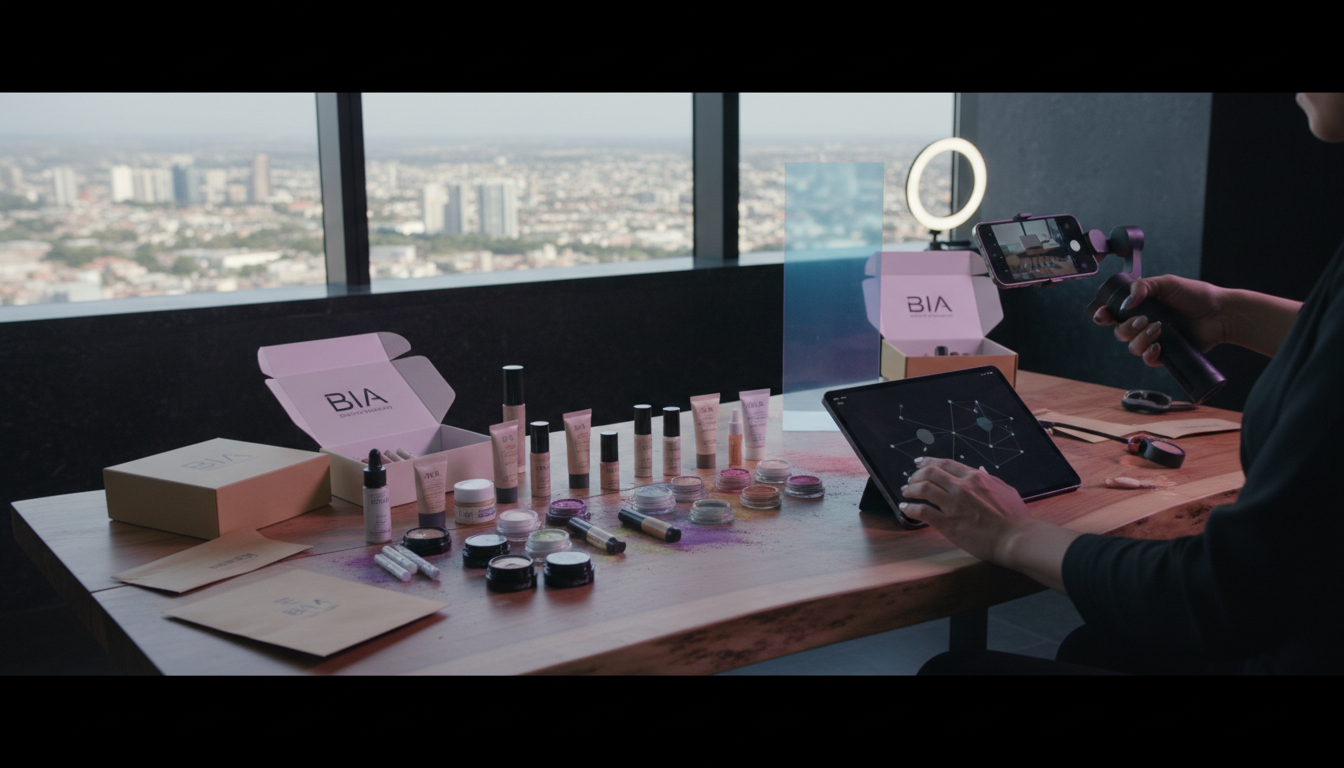
Two Budgets, One Blind Spot
Walk into most beauty marketing orgs and you'll find two separate line items: sampling (R&D, PR, trial generation) and creator marketing (awareness, content, affiliate sales). Different owners, different KPIs, different vendors. They rarely talk to each other, and almost never share data.
That separation made sense when sampling meant mailing boxes and creator marketing meant gifting PR packages for a post. It makes much less sense now that both channels can feed the same thing: first-party evidence of what converts a stranger into a repeat buyer.
In Brazil's beauty market — crowded, review-driven, and highly social — brands that fuse the two outperform brands that run them in parallel.
Why Combining Them Multiplies Data, Not Just Reach
Run sampling and creator marketing separately and you get two weak signals: trial volume on one side, engagement metrics on the other. Neither tells you whether the product actually earns a second purchase.
Run them together and you get a closed loop: a creator introduces a product to their audience, a sampling mechanism gets it into real hands at scale, and purchase and review data tells you what happened next. That loop is the difference between "this post got engagement" and "this product, introduced this way, drives repeat purchase at this rate."
The Mechanics of an Integrated Launch
An integrated launch typically looks like this:
- Creators seed demand with authentic, trackable content instead of generic unboxing.
- Sampling infrastructure fulfills that demand at scale — through an owned subscription base, retail partnerships, or a standalone sampling program — rather than one-off mailers.
- Every sample is tagged to its source creator or campaign, so trial, usage, and repeat purchase can be traced back to the exact touchpoint that generated it.
- Reviews and reorders feed back into both the creator brief (what messaging actually worked) and the product roadmap (what claims and formats resonate with this market).
What You Can Measure That You Couldn't Before
When sampling and creator marketing are unified, you can finally answer the questions that matter to a CMO or head of growth:
- Which creator tiers drive trial that converts, versus trial that just sits in a drawer?
- Does a nano-creator's audience reorder at a different rate than a mega-creator's?
- Which sampling mechanic (bundled with a subscription box, standalone send, in-store) produces the highest same-trip or near-term conversion?
- What does a five-star review actually correlate with — price, packaging, scent, texture, or the creator who introduced it?
These aren't vanity metrics. They're inputs for next quarter's media mix and next year's product brief.
A Practical Framework
Step 1 — Seed with creators, not just media. Choose creators for authenticity and audience fit, not just follower count. Their content becomes the "why try this" story that a generic sample box can't tell on its own.
Step 2 — Fulfill through owned sampling infrastructure. Scale matters here. A platform with an existing base of engaged beauty consumers can convert creator-driven interest into actual trial at a volume a single brand's paid media rarely matches on its own.
Step 3 — Close the loop. Tag every sample and every piece of content so that trial, reviews, and repeat purchase roll up to a single dataset. This is where most brands stop short — they can report reach and they can report trial, but they can't connect the two to purchase.
Step 4 — Feed the data back in both directions. Winning creator briefs and formats should shape the next sampling wave; winning sampling cohorts should shape which creators get re-booked.
Common Mistakes
- Treating sampling as a cost center and creators as a media line, with no shared measurement framework.
- Sampling at random instead of targeting the audience segments a creator campaign is trying to reach.
- Measuring creator ROI on engagement alone, with no visibility into what happens after the click.
- Running one-off campaigns instead of a repeatable system that compounds data launch over launch.
Why This Matters More in Brazil
Brazilian beauty consumers are unusually review-driven and community-oriented — word of mouth and creator recommendations carry real weight in purchase decisions. That makes the region an unusually efficient place to run integrated sampling-plus-creator launches, provided you have the local infrastructure to pull it off: an owned consumer base to sample into, a creator network built for beauty specifically, and a data layer that connects the two.
That's the combination B4A was built around: bfluence for beauty-native creator marketing, a sampling and experimentation infrastructure built on an owned consumer base, and BIA turning every trial, review, and reorder into usable intelligence. For brands planning a launch or relaunch in Brazil, the question isn't sampling or creators anymore — it's whether your systems can run them as one.


B4A Serviços de Tecnologia e Comércio S.A.
Avenida Jornalista Roberto Marinho, nº 85, 11º Andar (Conjunto 112), Cidade Monções - CEP 04576-010 - Cidade de São Paulo, Estado de São Paulo