
Sampling Meets Creators: Why the Best Beauty Launches in Brazil Pair Trial With Content
Most beauty brands run sampling and creator marketing as separate line items. The brands winning launches in Brazil run them as one connected system — and the data proves why.
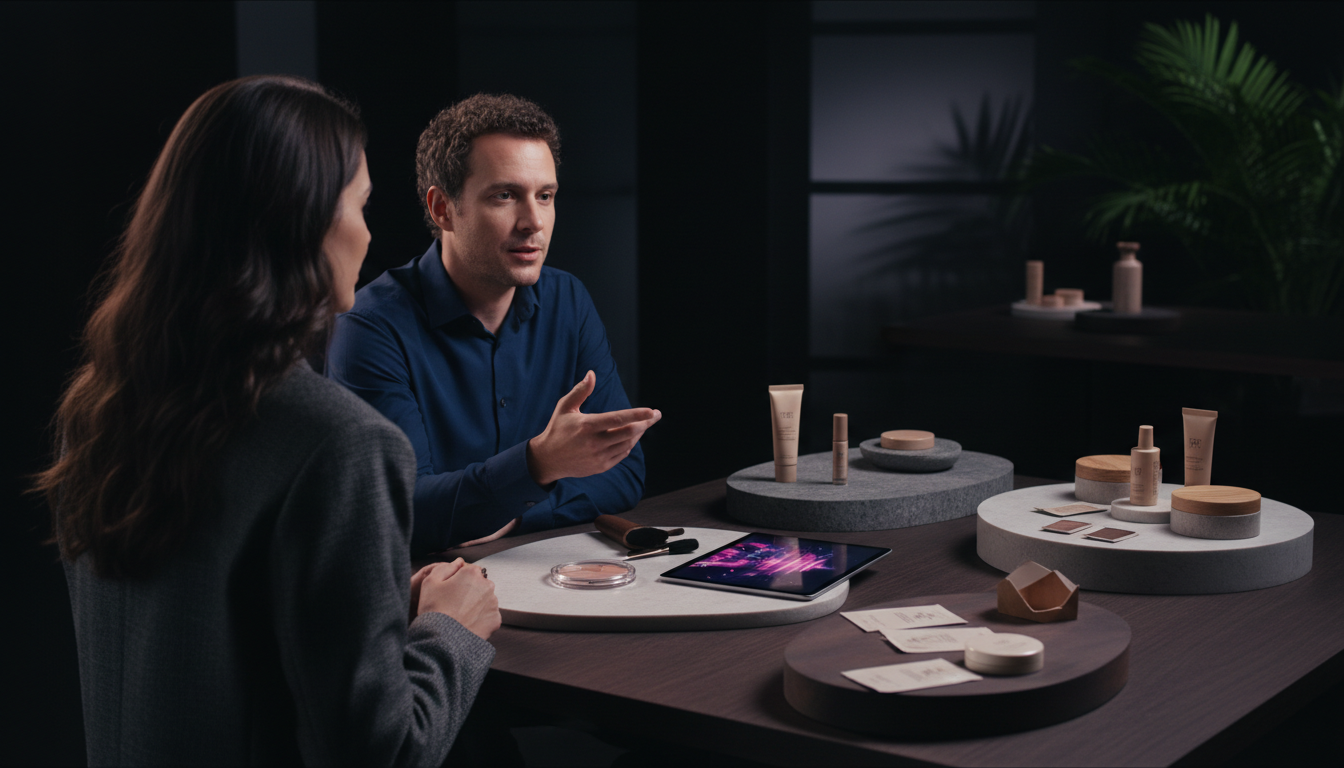
Two Budgets, One Blind Spot
Walk into most beauty launch planning meetings and you'll find two line items sitting next to each other on the spreadsheet: sampling and creator marketing. They're usually run by different people, briefed separately, and measured against different KPIs — trial rate on one side, reach and engagement on the other.
The brands getting the best launch economics in Brazil have stopped treating them as separate channels. They treat sampling and creator content as one system that feeds the same data pipeline — and the results show up in both conversion and CAC.
Why Trial and Content Work Better Together
The Attribution Gap in Creator Marketing
Creator content drives awareness and intent, but it rarely proves product performance. A viewer can be convinced a product looks good in a 30-second video and still hesitate to buy something they've never touched, smelled, or tested on their own skin or hair type. That hesitation is a bigger barrier in categories like skincare and haircare, where fit and skin tone matching matter.
The Content Gap in Sampling
Meanwhile, sampling programs generate real trial and real purchase-intent data, but most of that signal dies in a spreadsheet. Nobody turns the consumer who loved the sample into content that reaches other consumers. The campaign produces conversion data and nothing else — no creative asset, no social proof, no second wave of reach.
Put the two together and each one fixes the other's weak point: sampling gives creator content credibility, and creator content gives sampling distribution.
What a Combined Campaign Actually Looks Like
Step 1: Seed With Data, Not Guesswork
Instead of mailing samples to a generic list or a random creator roster, the starting point should be first-party data that tells you who is actually likely to convert. This is where a beauty intelligence layer like B4A's BIA becomes the targeting engine — using consumer profile, skin/hair data, and purchase history to identify the highest-propensity households and creators for a specific launch, rather than spraying samples across a broad audience and hoping for overlap.
Step 2: Let Creators Receive the Same Sample Journey as Consumers
Rather than briefing creators separately from the sampling wave, fold them into it. Creators who go through the same discovery-to-trial experience as regular consumers — including, where relevant, a skin or hair reading from an AI beauty advisor like MaIA — produce content that reflects a real usage journey instead of a scripted unboxing. This is also where a platform like bfluence earns its value: matching creators to the brand and audience that fit, instead of defaulting to follower count.
Step 3: Close the Loop Back Into Measurement
The step most programs skip is feeding the results back into one dataset. Which creators' audiences had the highest sample-to-purchase conversion? Which product claims, shown in content, correlated with the best review scores? This is the closed-loop structure — advice or content, trial, purchase, review — that turns a single campaign into a reusable targeting model for the next launch.
The Brazil Advantage
Brazil is one of the few markets where this kind of connected sampling-plus-creator model is operationally realistic at scale. The country has:
- A dense, highly engaged creator ecosystem across nano, micro, and mid-tier tiers, concentrated in beauty and wellness content.
- High social commerce fluency, where audiences routinely act on creator recommendations.
- Owned consumer distribution infrastructure — subscription clubs like glam reach hundreds of thousands of active beauty consumers who can be sampled and surveyed in the same motion.
Brands that try to replicate this with disconnected vendors — a sampling logistics company here, a creator agency there — typically end up with two reports that don't talk to each other and no way to prove which dollar did what.
The Practical Takeaway
If you're planning a launch or relaunch in Brazil, ask one question before signing any vendor contract: will the sampling data and the creator data land in the same place?
If the answer is no, you'll get two campaigns and two reports — reach on one side, trial on the other — with no way to connect a specific creator's audience to an actual purchase. If the answer is yes, you get something closer to a performance channel: a launch that gets measurably sharper with every market you run it in, because the targeting model compounds instead of resetting at zero each time.
For international brands entering or scaling in Brazil, that compounding effect — not the size of either individual budget — is usually what separates a launch that pays for itself from one that doesn't.


B4A Serviços de Tecnologia e Comércio S.A.
Avenida Jornalista Roberto Marinho, nº 85, 11º Andar (Conjunto 112), Cidade Monções - CEP 04576-010 - Cidade de São Paulo, Estado de São Paulo